Digital marketing for Kenyan SMEs, honestly
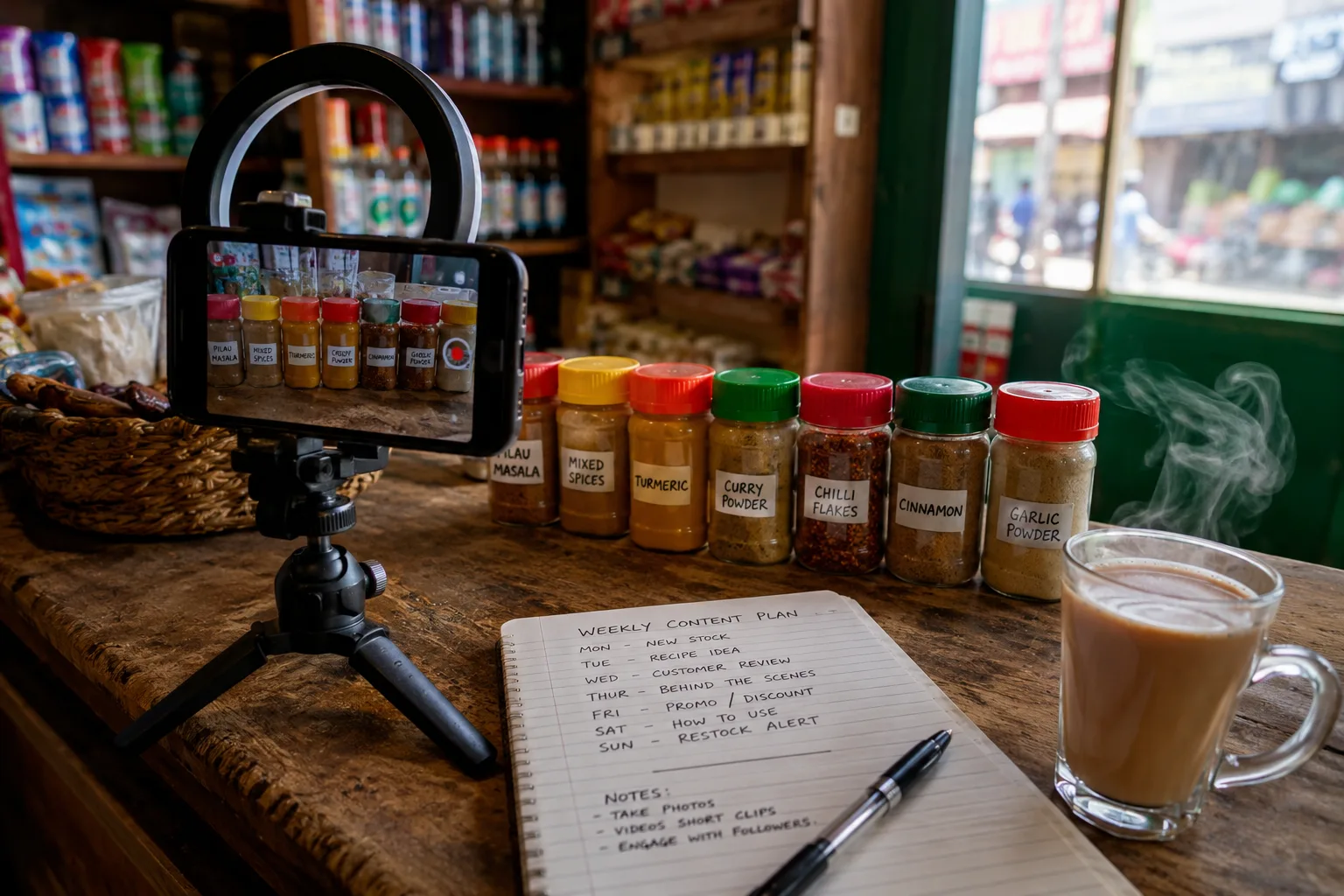
Most SMEs don’t have a marketing problem. They have an “everyone told me to do everything” problem.
Post daily. Run ads. Start a newsletter. Get on TikTok. Do SEO. Reply to every comment within an hour. It’s exhausting advice, and for a small business in Kenya running on a founder’s own hours, most of it is noise. Digital marketing for small businesses only works when you accept the thing nobody selling it wants to admit: you cannot do all of it, so the whole game is choosing well.
We wrote last time about why invisibility quietly costs you customers. This is the sequel. If that post made the case for showing up, this one is about where a founder with limited time and a tight budget should actually put it.
What’s the highest-value thing a small business can do first?
Get found by people already looking for you. Before a single social post, make sure that when someone in your area searches for what you sell, you exist on the map with correct hours, photos, and a way to contact you. This is the cheapest, highest-intent traffic there is.
Most owners skip it because it isn’t glamorous. There’s no dashboard to admire, no likes to count. But a person searching “barber near me” or “spice supplier Nairobi” has already decided to buy. They’re not browsing; they’re choosing. If your Google Business Profile is empty or wrong, you lose that sale before you knew it existed.
We saw this plainly with Mandela Barbery, a premium Nairobi barbershop. Once their local presence was set up properly, their Google Maps visibility climbed and online bookings grew to sixty percent of their appointments. Same barbers, same chairs. The difference was being findable at the exact moment someone nearby wanted a cut.
Fix this first. It usually takes a day and costs nothing but attention.
Which social media channel should an SME actually pick?
The one your customers already live on, and only that one to start. For most Kenyan SMEs that means Instagram, Facebook, or WhatsApp, not all three at once. One channel done consistently beats three done occasionally, every single time. Depth over spread.
Here’s what doesn’t work: posting daily because a course told you to. Frequency without a point is just noise you’re paying for in hours. A shop posting a blurry product photo every morning with no caption, no offer, and no reason to care is busy, not visible.
What does work is boring and effective. Pick the platform where your buyers scroll. Post with a purpose, whether that’s showing the work, answering a real question, or making an offer. Then reply to every comment and DM like a human, quickly. In East Africa the DM often is the sale, so treat WhatsApp as a storefront, not an afterthought.
Social media marketing for an SME is not a content-volume competition. It’s a consistency-and-response competition, and the small business usually wins that one because you can actually reply.
Should a small business boost posts or run proper ads?
Neither, until you know what a customer is worth to you. Boosting a post because Facebook nudged you with a blue button is the fastest way to donate money to Meta. Paid reach only pays off once you know what turns attention into an enquiry, and where those enquiries currently leak away.
Boosting optimises for likes and reach, which feel like progress and rarely are. Someone who liked your photo has not agreed to buy anything. The question that matters is whether your marketing spend produces enquiries, bookings, or sales, and most SMEs have never tracked that because it’s less fun than watching a number go up.
Before you spend a shilling on ads, fix the path from attention to enquiry: a clear offer, an obvious way to contact you, and someone who responds fast. That plumbing is what turning attention into actual enquiries is about, and it’s where boosted posts almost always fall down. A perfect ad pointing at a dead-end WhatsApp number is money set on fire.
Once the path works, small, targeted spend can pour more people into it. Not before.
How do you do digital marketing on a budget without burning out?
Build a small system and let it run, instead of relying on inspiration. Pick two things you’ll do every week, no matter what, and automate or delegate the rest. Marketing on a budget isn’t about doing less; it’s about doing the same few high-value things reliably rather than everything sporadically.
The founders who burn out treat marketing as a mood. They post in bursts when business is slow, go quiet when it’s busy, and wonder why nothing compounds. The ones who grow treat it as a function with a rhythm, the same as invoicing or opening the shop.
A budget system for most SMEs looks like this. Your local search presence, set up once and kept accurate. One social channel, posted to on a fixed schedule you can actually sustain. Every enquiry answered the same day. That’s it. It’s unglamorous, it fits around real work, and it beats a scattergun approach costing three times the effort.
It compounds, too. Mulsons, an East African spice manufacturer, saw a threefold increase in online enquiries within the first quarter of a properly built digital presence. Not from posting more, but from being consistently present where buyers were looking. Kova Collective landed five new brand partnerships within two months of launch, largely because their online presence finally looked credible enough to trust.
Where does this leave a sceptical founder?
With permission to ignore most of the advice you’ve been given. You don’t need to be everywhere. You need to be findable when people search, present on one channel your customers use, and fast to reply when someone raises a hand. Everything else is optional until those three are solid.
If you want a starting point that costs nothing, run a free SEO audit on your own site and see what a customer sees. It’s a sobering, useful ten minutes.
And if you’d rather have a system built once than piece it together between everything else you run, that’s the digital marketing we do for SMEs across East Africa. No lock-in, no jargon, no daily-posting guilt trip. Tell us where you’re stuck and we’ll tell you, honestly, what we’d fix first.
Related posts
 · Yash Shah
Lead generation for small businesses
Lead generation for small businesses is a different problem than the big-agency playbook solves. Here's what actually brings in qualified leads.
Read article→ · Yash Shah
AI in retail and e-commerce for small teams
Most of Amazon's AI playbook doesn't transfer to a ten-person retailer. These four pieces do, including the WhatsApp part everyone underestimates.
Read article→ · Yash Shah
AI use cases in manufacturing and supply chain
You don't need a data team to use AI in a factory. Practical wins in demand forecasting, quality inspection, maintenance, and the paperwork nobody talks about.
Read article→