How much does a website cost in Kenya in 2026?
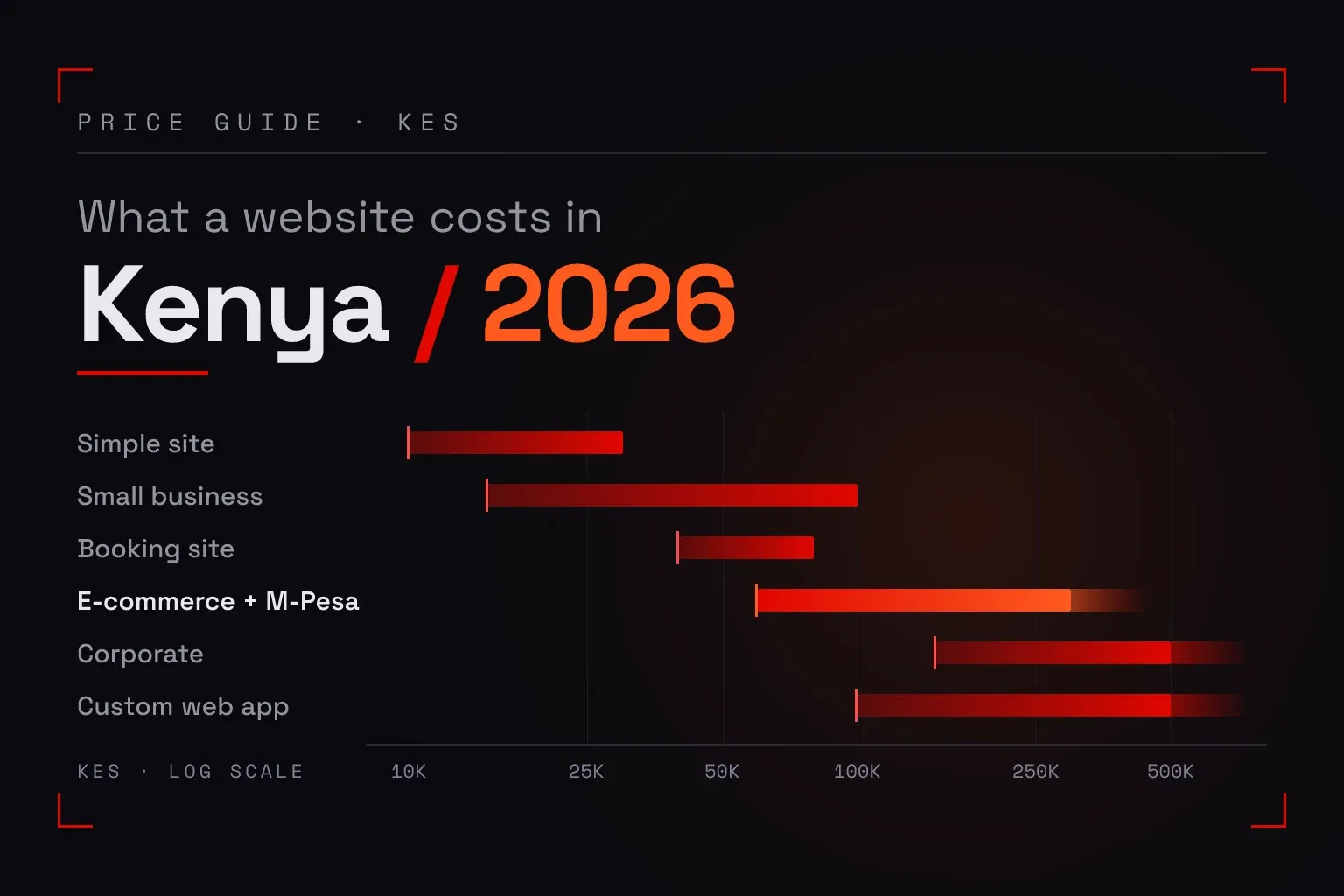
A website in Kenya costs roughly KES 10,000 to 30,000 for a simple site, KES 15,000 to 100,000 for a small business site, KES 60,000 to 300,000+ for an online shop with M-Pesa, and KES 100,000 to 500,000+ for a custom web app. Add about KES 2,000 to 12,500 a year for a domain and hosting.
Those are market ranges published by Kenyan agencies, freelancers and hosts in 2025 and 2026, linked throughout so you can check them. Here’s how to work out where your project sits, and what to watch for before you pay a deposit.
Key takeaways
- The build is a one-off cost, but a website has running costs too. Domain renewal, hosting and maintenance arrive every year, whoever builds it.
- The same brief gets wildly different quotes. One Nairobi agency says quotes for the same need range from USD 350 to 3,500, and McTaba says agencies typically charge 2 to 5 times freelancer rates.
- M-Pesa adds cost, but the Daraja API itself is free. You pay for the integration work and Safaricom’s transaction fees, and you need your own Paybill or Till number.
- Most of the price comes from scope. The number of page templates, custom design, content, and features like payments or bookings drive the quote far more than the page count.
- Cheap quotes often hide costs later. Check who owns the domain, who controls the hosting, and what happens when something breaks.
How much does each type of website cost in Kenya?
The table below pulls together published ranges from Kenyan sources. Dollar and pound figures are approximate conversions at about KES 130 to the US dollar and KES 173 to the pound (ExchangeRate-API, 27 October 2026), rounded.
| Website type | What it usually includes | Market range (KES) | Approx. USD / GBP | Sources |
|---|---|---|---|---|
| Simple site or landing page | 1 to 3 pages, contact form, WhatsApp button | 10,000 to 30,000 | $75 to $230 / £60 to £175 | McTaba, Achi Systems |
| Small business website | 5 to 10 pages, often on WordPress or another CMS | 15,000 to 100,000 | $115 to $770 / £85 to £580 | McTaba, Achi Systems, Hostiko |
| Booking or scheduling site | Appointments, reminders, calendar | 40,000 to 80,000 | $310 to $615 / £230 to £460 | McTaba |
| E-commerce with M-Pesa | Product catalogue, cart, M-Pesa checkout, order management | 60,000 to 300,000+ | $460 to $2,300+ / £345 to £1,730+ | McTaba, Achi Systems |
| Corporate website | Many sections, custom design, multiple stakeholders | 150,000 to 500,000+ | $1,150 to $3,850+ / £865 to £2,880+ | Achi Systems |
| Custom web application | Logins, dashboards, integrations, your own business logic | 100,000 to 500,000+ | $770 to $3,850+ / £580 to £2,880+ | McTaba, Achi Systems, Hostiko |
Most of these ranges reflect freelancer and small-studio pricing. McTaba’s guide says agency rates run 2 to 5 times higher than freelancer rates, so an agency quote above the top of a range isn’t automatically a rip-off. It depends on what’s included.
How much does a simple website cost in Kenya?
A simple site of one to three pages typically costs KES 10,000 to 30,000. McTaba puts a one-page landing page at KES 10,000 to 20,000, and Achi Systems puts a basic one to three page site at KES 10,000 to 30,000. At this price, expect a template adapted to your brand, with content you supply yourself.
How much does an e-commerce website cost in Kenya?
An online shop with M-Pesa checkout usually costs KES 60,000 to 150,000 from a freelancer (McTaba), and KES 80,000 to 300,000 or more across the wider market (Achi Systems). The spread comes from catalogue size, how orders and stock are managed, delivery logic, and how well the payment flow handles failed or delayed M-Pesa confirmations.
How much do a domain and hosting cost in Kenya?
A domain and basic hosting together usually cost a few thousand shillings a year. These are the recurring costs you pay whoever builds your site, so make sure they’re in your name.
Domain names
- .co.ke: first-year prices range from KES 399 to 2,280 depending on the registrar, with renewals of KES 1,200 to 2,500 a year. The same source reports that KeNIC, the .ke registry, raised its fees by 43% from 1 February 2025, which registrars passed on.
- .com: about KES 1,200 to 2,500 a year.
Watch the renewal price, not just the first-year promotion. A KES 399 domain that renews at KES 2,000 isn’t the bargain it looks like.
Hosting
- Shared hosting (fine for most brochure and small business sites): Hostiko lists plans from KES 899 to 2,500 a year. Achi Systems gives a wider market range of KES 2,000 to 10,000 a year.
- Business or dedicated hosting: about KES 10,000 to 50,000 a year.
- Managed VPS (busier shops and web apps): Hostiko lists from KES 2,500 a month.
SSL certificates
You shouldn’t pay much, if anything, for a basic SSL certificate (the padlock in the browser). Let’s Encrypt issues them free, and many Kenyan hosts include SSL in their plans. You do need one, though: browsers flag sites without it, and M-Pesa’s Daraja API needs an HTTPS callback address.
What does M-Pesa integration cost?
There are three separate costs: the integration work, Safaricom’s transaction fees, and any aggregator fees if you don’t connect directly.
Is the Daraja API free?
Yes. McTaba’s Daraja guide states that the Daraja API itself is free, with no API call charges. To go live you need your own Safaricom business shortcode (a Paybill or Till number), which takes business registration documents and a bank letter according to the same guide. You also need an HTTPS website for Safaricom to send payment confirmations to, and Hostiko notes that go-live approval timelines vary, so leave a buffer before launch day.
What you pay per transaction
- Lipa na M-Pesa Buy Goods (Till): after Safaricom’s August 2026 changes, collections up to KES 500 are free to the merchant, and amounts above that attract 0.55%, capped at KES 200 per transaction (The Standard, 2 August 2026). Tariffs change, so check Safaricom’s current rates before you set prices.
- Aggregators (payment companies that let you collect without your own shortcode) charge 1.5% to 3.5% per transaction on top of Safaricom’s fee. That’s easier to start with but costs more as you grow.
The integration work
This is usually bundled into an e-commerce quote. For a sense of scale, one Kenyan host publishes one-off integration packages of KES 15,000 for STK Push, KES 35,000 with C2B and reconciliation, and KES 70,000 with B2C payouts. Reconciliation, matching each payment to the right order, is the part that’s worth paying for. A checkout that takes the money but loses the order is worse than no checkout at all.
Should you use a website builder, a freelancer or an agency?
It depends on how much of the work you want to do yourself, and what happens if the site goes down.
DIY website builders
Builders like Wix and Shopify swap a build fee for a monthly subscription. Shopify’s Basic plan is USD 39 a month, or USD 29 a month billed yearly (about KES 3,800 to 5,100 a month). Wix’s premium plans start at about USD 17 a month billed yearly, and Wix notes that prices vary by location. You do the setup, the writing and the photos yourself, and on Shopify, M-Pesa checkout generally means adding a third-party payment app. You get hosting, security updates and support included.
Freelancers
Freelancers give the lowest custom-build prices in the table above. They suit simple sites with a clear brief. The risk is continuity: if your one developer moves on, you need the logins, the code and the hosting in your name to hand it to someone else.
Agencies
Agencies cost more. McTaba’s 2 to 5 times figure is a fair rule of thumb. What you’re paying for is a team: design, development, content, SEO and someone who answers when things break. That matters most for e-commerce, M-Pesa and anything connected to your CRM or operations.
What drives the price of a website?
Five things account for most of the difference between a KES 20,000 quote and a KES 200,000 one:
- Templates, not pages. Ten pages that share one layout are cheaper than five pages that each need their own design.
- Custom design or a theme. A bought theme, often KES 3,000 to 8,000, is cheaper than original design work, but it looks like everyone else using it.
- Content. Copywriting, product descriptions and photography are often missing from cheap quotes, and they decide whether the site sells.
- Features. Payments, bookings, logins, a CRM connection or eTIMS integration each add development and testing time.
- Speed and search. A fast, well-structured site that Google and AI assistants can understand takes more care to build than one that only looks right.
What hidden and recurring costs should you plan for?
The build fee is only part of the cost. Plan for these every year:
- Domain renewal: KES 1,200 to 2,500 for .co.ke (Achi Systems).
- Hosting: from about KES 900 to 10,000 for shared hosting, more for a shop with real traffic (sources above).
- Maintenance: McTaba puts a monthly retainer at KES 5,000 to 15,000, and Achi Systems gives a wider KES 2,000 to 50,000 a month depending on scope. This covers updates, backups, security fixes and small edits.
- Content updates: new products, prices and photos, done by you or paid for.
- Transaction fees if you sell online (see the M-Pesa section).
What are the red flags in a cheap website quote?
A low price is fine. A low price with these warning signs usually isn’t:
- The domain is registered in the developer’s name. If you don’t own it, you don’t own your web address.
- No access to hosting or the admin panel. You should hold the logins, even if someone else manages them.
- No written scope. Without a list of pages, features and revisions, every change becomes a new invoice.
- Pirated (“nulled”) themes or plugins. They’re a common source of malware and can’t be updated safely.
- No mention of content, mobile testing or SSL. These are basics, not extras.
- No plan for after launch. Ask who fixes it if it breaks in month three, and what that costs.
There’s also the question of lifespan. Kolonell estimates that a USD 350 site lasts about 18 months before it needs rebuilding, against four to five years for a USD 1,300 one. That’s one agency’s estimate, but the logic holds: a site you rebuild twice isn’t cheap.
How long does it take to build a website in Kenya?
A simple business website typically takes two to three weeks, and a larger site four to six weeks. Kolonell’s published tiers put a five-page site at two weeks, a site with a blog at three weeks, and a 15+ page site at four to six weeks. E-commerce and web apps take longer, and the most common delay isn’t development at all. It’s waiting for content, product photos and, for M-Pesa, the Safaricom go-live approval.
Questions people ask about website costs in Kenya
Can I get a website for free in Kenya?
You can start on a free builder plan, but you’ll usually get the builder’s branding and a subdomain rather than your own address. A real business site needs at least a domain and hosting, which Hostiko prices at about KES 2,099 for the first year if you build it yourself on WordPress.
How much does a .co.ke domain cost?
Between KES 399 and 2,280 for the first year, and KES 1,200 to 2,500 to renew, depending on the registrar (Achi Systems). Compare renewal prices, not just promotions.
How much does hosting cost per month in Kenya?
Entry-level shared hosting starts at under KES 100 a month on annual billing. Hostiko’s starter plan is KES 899 a year. A managed VPS for a busy shop or app starts around KES 2,500 a month.
Do I need a Paybill or Till number to accept M-Pesa on my website?
Yes, if you connect directly through Safaricom’s Daraja API. If you don’t have one, an aggregator can collect for you on its own shortcode, at 1.5% to 3.5% extra per transaction.
Is it cheaper to pay monthly or pay once?
Paying once for a build usually works out cheaper over three or more years than a builder subscription. A subscription spreads the cost and bundles hosting and support, though. Add up three years of each, including maintenance, before you decide.
How do you get an accurate quote?
Write down three things before you talk to anyone: what the site must do (take bookings, sell, generate enquiries), which features are essential on day one, and your budget range. Then ask every provider to quote against the same list, in writing, including the recurring costs above.
If you already have a site, start by seeing what’s wrong with it. Google’s free PageSpeed Insights checks speed and SEO in a couple of minutes. If customers still aren’t finding you, our post on why your business might be invisible online explains why, and digital marketing for Kenyan SMEs covers what to do once the site is live.
At TekZuri we build websites, online shops and web apps for businesses in Kenya and abroad. We don’t publish a price list because scope varies too much, but we’ll give you a clear written quote after a free strategy call.
Related posts
 · Yash Shah
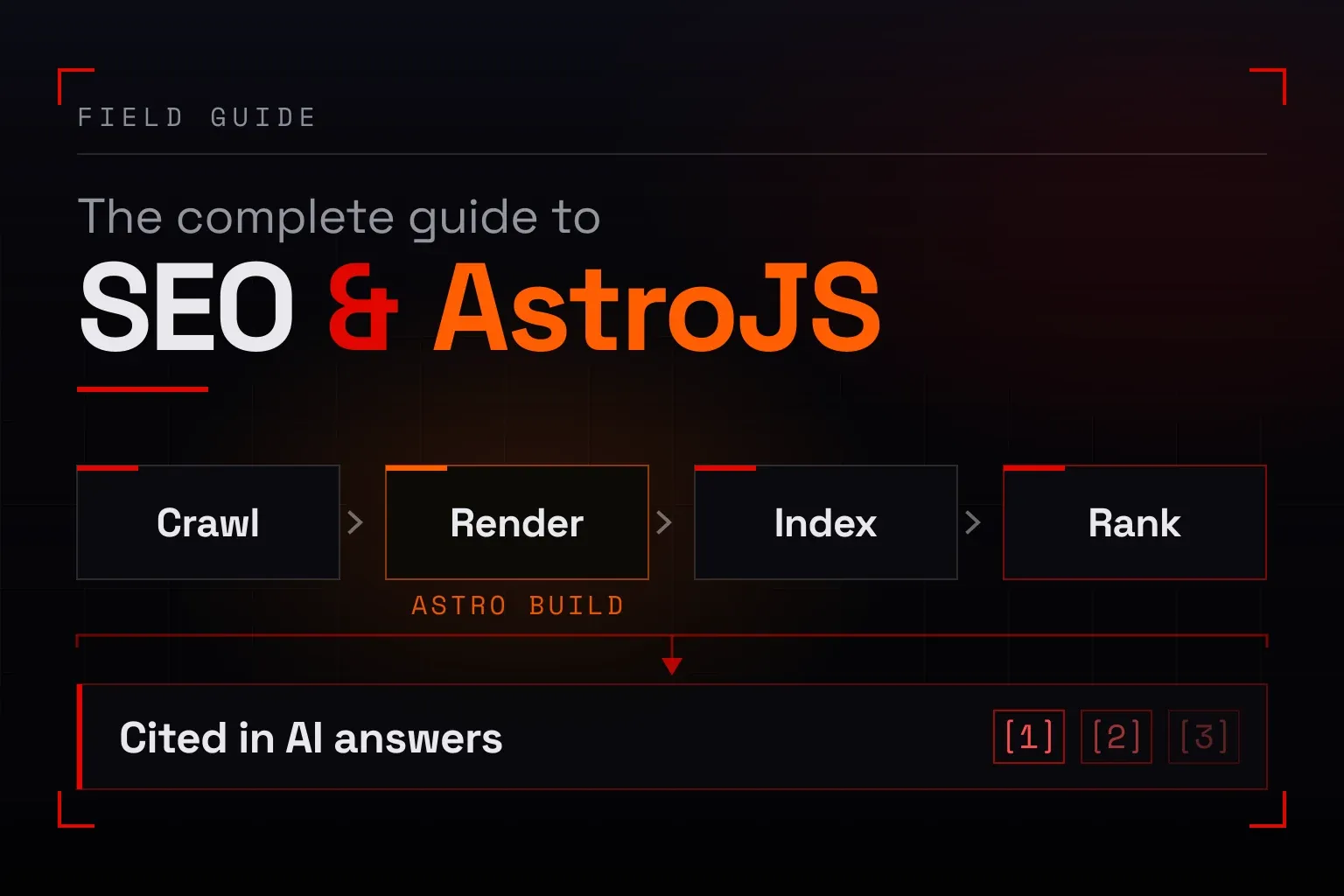
SEO and Astro: the complete 2026 guide
A 21-chapter field guide to modern SEO: crawling, Core Web Vitals, schema and AI search, plus the AstroJS patterns that ship it fast.
Read article→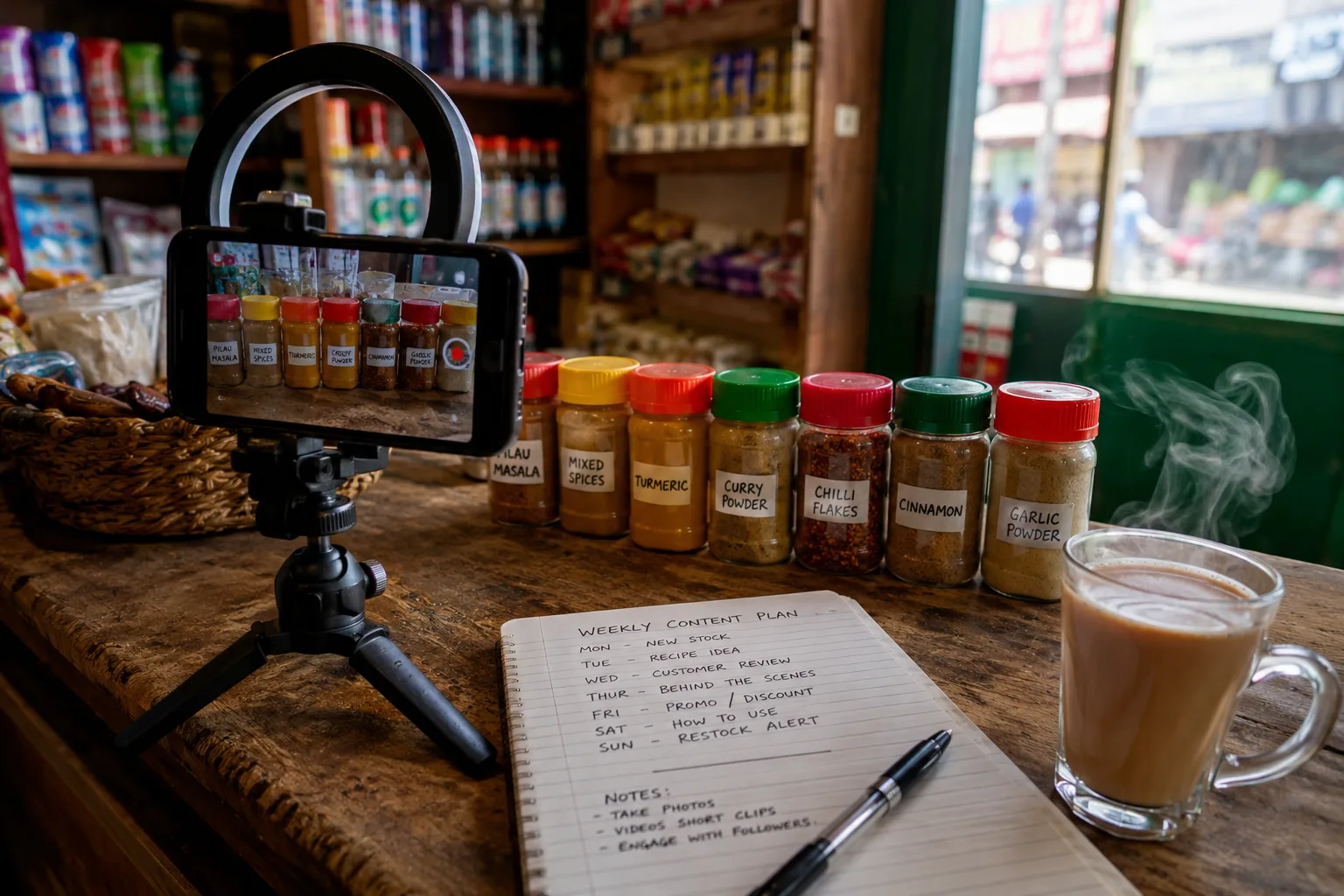 · Yash Shah
Digital marketing for Kenyan SMEs, honestly
Digital marketing for small businesses in Kenya, without the hype. Where a founder on a tight budget should actually spend limited time and money.
Read article→ · Yash Shah
Lead generation for small businesses
Lead generation for small businesses is a different problem from the one the big-agency playbook solves. Here's what brings in qualified leads.
Read article→